Tiempo Extra para leer - 30% dcto en libros de PRH  Ver más

Enviar a
Bogota, Cundinamarca
0
  • argentina
  • chile
  • colombia
  • españa
  • méxico
  • perú
  • estados unidos
  • internacional

Selecciona tu país

América

Europa

Resto del mundo

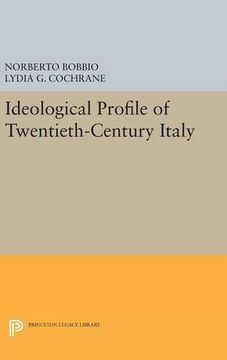
portada Ideological Profile of Twentieth-Century Italy (Agnelli) (en Inglés)
Formato
Libro Físico
Año
2016
Idioma
Inglés
N° páginas
282
Encuadernación
Tapa Dura
ISBN13
9780691631165

Ideological Profile of Twentieth-Century Italy (Agnelli) (en Inglés)

Norberto Bobbio (Autor) · Princeton University Press · Tapa Dura

Ideological Profile of Twentieth-Century Italy (Agnelli) (en Inglés) - Norberto Bobbio

Libro Nuevo Importado
Envío: 14 a 20 días háb.
$ 697.168$ 348.584
-50%
Costos de importación incluídos en el precio ✅
Libro Nuevo

Quedan 93 unidades

$ 348.584
¡Envío Gratis!  Llega entre el 04 Ago y el 14 Ago a Bogota, Cundinamarca. Seleccionar ubicación

Reseña del libro "Ideological Profile of Twentieth-Century Italy (Agnelli) (en Inglés)"

Anyone interested in the entire sweep of political thought over the last hundred years will find in Norberto Bobbio's Ideological Profile of Twentieth-Century Italy a masterful, thought-provoking guide. Home to the largest communist party in a democratic society, Italy has been a unique place politically, one where Christian democrats, liberals, fascists, socialists, communists, and others have co-existed in sizable numbers. In this book, Bobbio, who himself played an outstanding role in the development of Italian civic culture, follows each of the major ideologies, explaining how they developed, describing the key actors, and considering the legacies they left to political culture. He wrote Ideological Profile in 1968 to explain from a personal perspective the history behind that decade's tumultuous politics. Bobbio's defense of democracy and critique of capitalism are among the themes that will particularly interest American readers of this updated edition, the first to appear in English.Beginning in the late nineteenth century with positivism and Marxism, Bobbio next presents the ideological currents that developed before the outbreak of the First World War: Catholic, socialist, irrational and anti-democratic thought, the reaction against positivism, and the thinking of Benedetto Croce. After discussing the impact of the war, the author turns to the revolutionary-reactionary polarization of the postwar period and the ideology of fascism. The final chapters consider Croce's opposition to fascism and the ideals of the resistance and conclude with the post-Second World War "Years of Involvement."Originally published in 1995.The Princeton Legacy Library uses the latest print-on-demand technology to again make available previously out-of-print books from the distinguished backlist of Princeton University Press. These editions preserve the original texts of these important books while presenting them in durable paperback and hardcover editions. The goal of the Princeton Legacy Library is to vastly increase access to the rich scholarly heritage found in the thousands of books published by Princeton University Press since its founding in 1905.
Norberto Bobbio
  (Autor)
Ver Página del Autor
Norberto Bobbio (1909–2004) fue un filósofo, jurista y politólogo italiano, ampliamente reconocido por su influencia en el pensamiento jurídico y político contemporáneo. Nació en Turín, donde también desarrolló gran parte de su actividad académica. Estudió derecho y filosofía, y desde temprano se comprometió con una visión liberal y democrática, enfrentándose al régimen fascista de Benito Mussolini, lo que le valió persecuciones y detenciones.

Su obra abarca campos como la teoría del derecho, la filosofía política, los derechos humanos y la democracia. Defendió una visión del derecho como instrumento de control del poder, en línea con su postura garantista, y contribuyó a delinear los fundamentos de un Estado democrático basado en normas claras y racionales.

Bobbio fue también un intelectual comprometido con la vida pública, participando en debates clave sobre la justicia social, el pacifismo, la ética laica y el papel de la ley en la sociedad moderna. Se convirtió en un referente del pensamiento progresista en Europa durante el siglo XX.

Entre sus obras más influyentes destacan Teoría general del derecho, Derecho y Estado en la filosofía moderna, y El futuro de la democracia. Hasta sus últimos años, mantuvo una activa participación en la vida política y cultural italiana.
Ver más
Ver menos

Opiniones del libro

Preguntas frecuentes sobre el libro

Todos los libros de nuestro catálogo son Originales.
El libro está escrito en Inglés.
La encuadernación de esta edición es Tapa Dura.

Preguntas y respuestas sobre el libro

¿Tienes una pregunta sobre el libro? Inicia sesión para poder agregar tu propia pregunta.

Opiniones sobre Buscalibre

Ver más opiniones de clientes