Compartir
So You Think You Can Skate (en Inglés)
Allan David Taylor
(Autor)
·
Createspace
· Tapa Blanda
So You Think You Can Skate (en Inglés) - Taylor, Allan David
Libro Nuevo
Importado
Envío: 19 a 25 días háb.
$ 113.085$ 56.542
Costos de importación incluídos en el precio ✅
Reseña del libro "So You Think You Can Skate (en Inglés)"
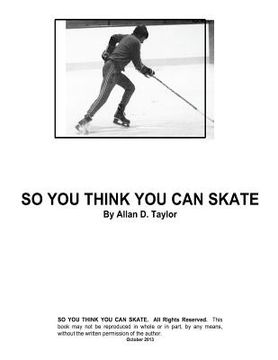
"So you think that you can skate" is a radical departure from the conventional methods of teaching someone how to skate or improve their skating ability.Few people realize that altering the lacing pattern of the conventional hockey skate boot can bring noticeable improvements to their skating performance. Even fewer realize changing the lacing pattern also allows the skater to use both joints of the foot, namely the toes and the ankle, which is the most powerful muscle in the body. These joints are similar to the two joints of the hand; the wrist and the fingers. These small joints can move faster than their larger cousins. The toes can impart speed and power to the stride. The fingers can impart speed and sometimes strange movement to a thrown object. Just think about what limitations you would experience if you threw the ball without using your fingers or tried to jump up in the air without using your toes.There is one drawback with changing the lacing pattern on the skates of "older" skater's. The usual comment is something to the effect that this is really weird, I cannot do this. The feeling is often so overwhelming, the older skaters simply cannot cope with the sensation they experience. The weird feeling is the sudden sensation that my skates are loose. In reality, the skates are not loose. It is the ankle telling the brain "I am now free to move". These skaters knowingly or not will give up the use of the strongest muscle in the body rather than change their lacing pattern. Young skaters, who do not have any idea of what a weird feeling is, make serious progress in improving their skating. In minutes beginner skaters can be taught balance and stability. Should they fall, these beginners can recover to the standing position unaided.Case in point; three blind teenagers were part of a learn-to-skate program. Each boy had 50 minutes of individual instruction. At the end of their lesson, each could do a T-start; stride around the arena; and do a snow plow stop. At no time during the lesson were they physically assisted. All of this was achieved because each had their stability and balance instantly under control. Changing the lacing pattern of the skates permitted the first movement a humanoid must make before they can walk or run; jump or land; sit or stand. Otherwise there is no controlled movement of the legs. That first movement is the ability to first lean forward. This positions the weight of the body directly over the balls of the feet to provide balance and stability.
- 0% (0)
- 0% (0)
- 0% (0)
- 0% (0)
- 0% (0)
Todos los libros de nuestro catálogo son Originales.
El libro está escrito en Inglés.
La encuadernación de esta edición es Tapa Blanda.
✓ Producto agregado correctamente al carro, Ir a Pagar.